Radar in Search and Rescue
RadarHow radar helps in search and rescue: how a radar SART shows on screen and why only X-band sees it, which distress locating devices exist, how search patterns are chosen and why track spacing matters.
Last reviewed 1 Nov 2026 · From a professional captain's years of study notes · Organised with AI and checked against current regulations · How we write
On this page (6)
Radar’s two roles in search and rescue
In short: radar picks up distress locating beacons and supports the SAR plan with your own radar picture.
Read first: Radar Rules and Performance Standards (X-band and S-band) and Collision Avoidance with Radar. This is the last topic of the Radar area.
Radar supports search and rescue (SAR) in two ways:
- Distress locating signals — beacons that make a survivor stand out on the display: the radar SART, the AIS-SART and the MOB-AIS beacon.
- SAR operations — combining your own radar picture with information from the other SAR units to draw up and carry out a SAR plan.
Which three distress locating devices should you be able to name?
Radar SART, AIS-SART and MOB-AIS.
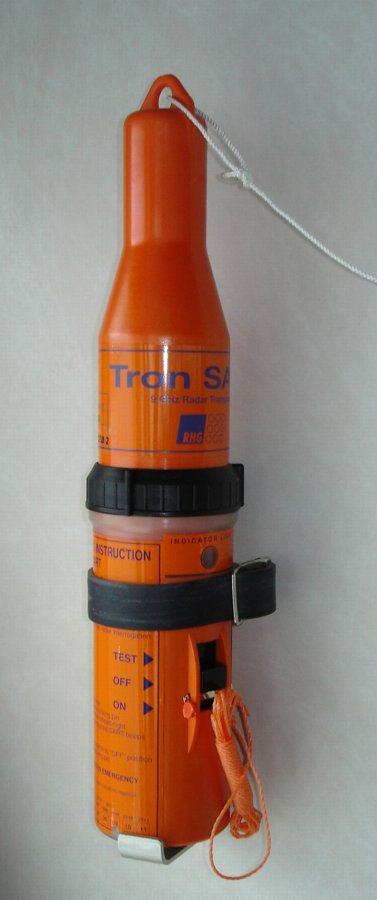
Radar SART — recognising it on screen
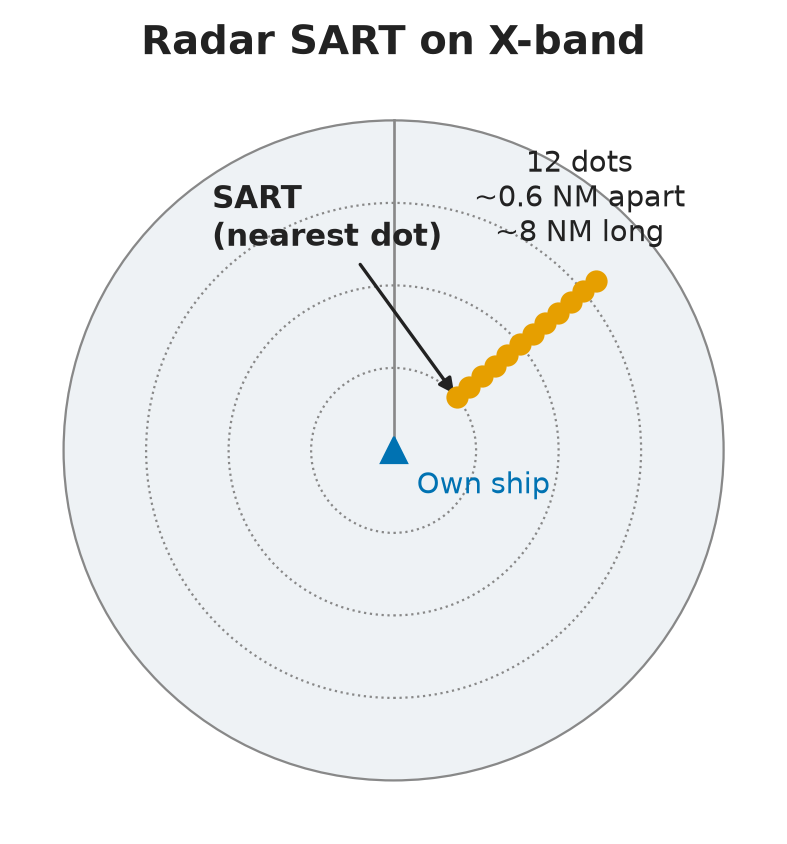
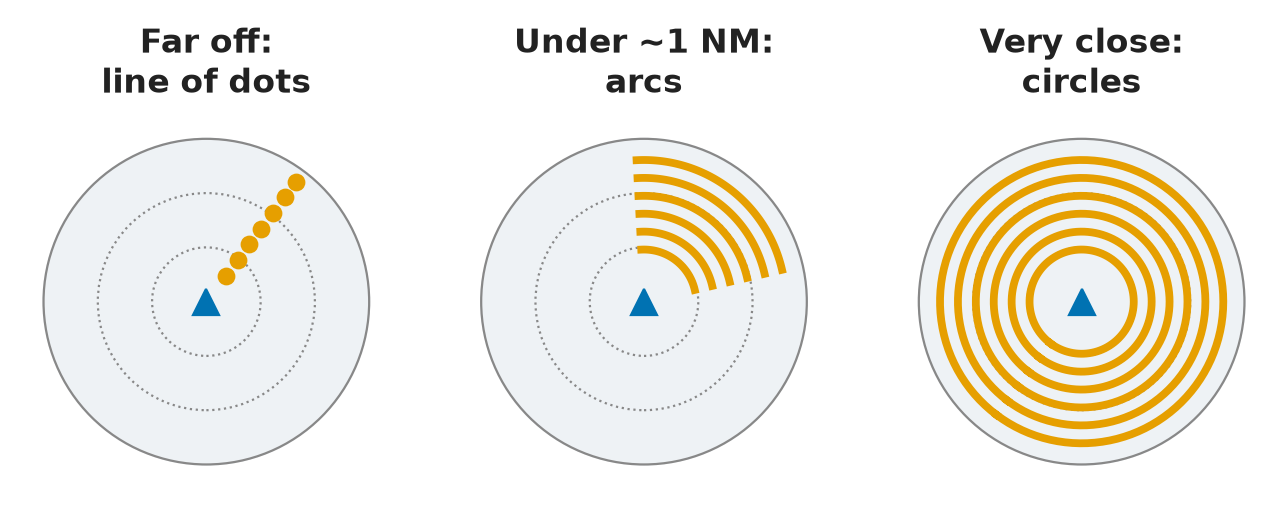
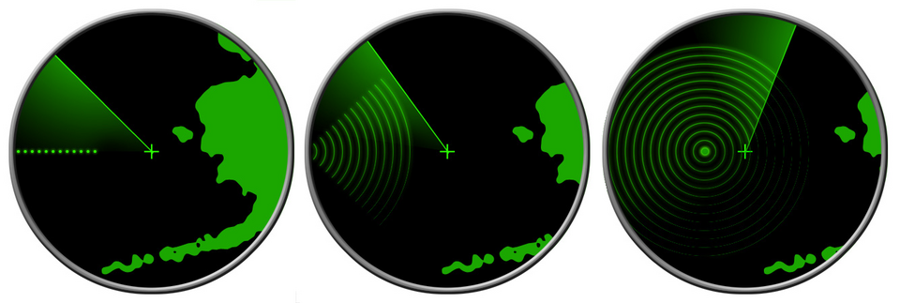
In short: on X-band a SART paints a line of 12 dots outwards along its bearing; the nearest dot is the SART. Close in, the dots become arcs, then circles.
What you see
When your radar pulse triggers a SART, the beacon replies with a burst of signals that paints a distinctive pattern:
- A row of 12 blips starting at the SART’s position and running outwards, away from your ship, along the SART’s bearing.
- The blips are roughly 0.6 NM apart, so the line reaches about 8 NM beyond the beacon.
- The blip nearest to you is the SART itself — head for that end of the line.
How the picture changes as you close in
| Distance to the SART | What the display shows |
|---|---|
| Far off | A straight line of dots along the bearing |
| Closing, under about 1 NM | The dots spread sideways into arcs |
| Very close | The arcs join into complete circles around the centre |
Exam tip: asked how a SART looks on an X-band set, the expected answer is “initially a line of dots”.
Which radar can see it
A radar SART answers X-band (9 GHz, 3 cm) only. It stays invisible on S-band (3 GHz, 10 cm) — when searching for a SART, use the X-band radar.
Self-quiz
How does a SART first appear on an X-band display?
As a line of 12 dots, about 0.6 NM apart, running outwards from the SART’s position along its bearing for roughly 8 NM.
What happens to the SART picture inside about 1 NM?
The dots widen into arcs; very close, they become full circles.
A SART is reported nearby but your S-band radar shows nothing. Why?
A SART responds only to 9 GHz (X-band) pulses, so it never shows on a 3 GHz (S-band) radar.
SAR operations with radar
In short: choose the IAMSAR pattern from the size of the area and how accurate the datum is, and keep track spacing tight.
Who searches what
- Aircraft and fast vessels sweep large areas quickly.
- Other ships then search the same area with different patterns, so it is covered several times — every extra pass raises the chance of detection.
Track spacing — why it matters
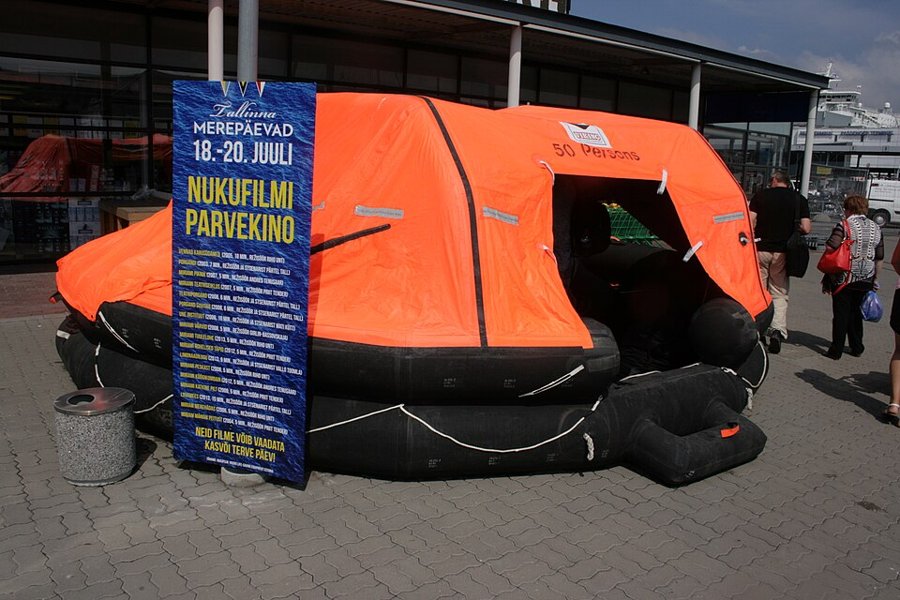
Survivors are far harder to spot than you might expect: even a bright orange liferaft can be missed only 1–2 NM off your track. Search legs must be close enough together that nothing slips through the gap between them.
Choosing a search pattern (IAMSAR Vol. III)
| Pattern | When it fits |
|---|---|
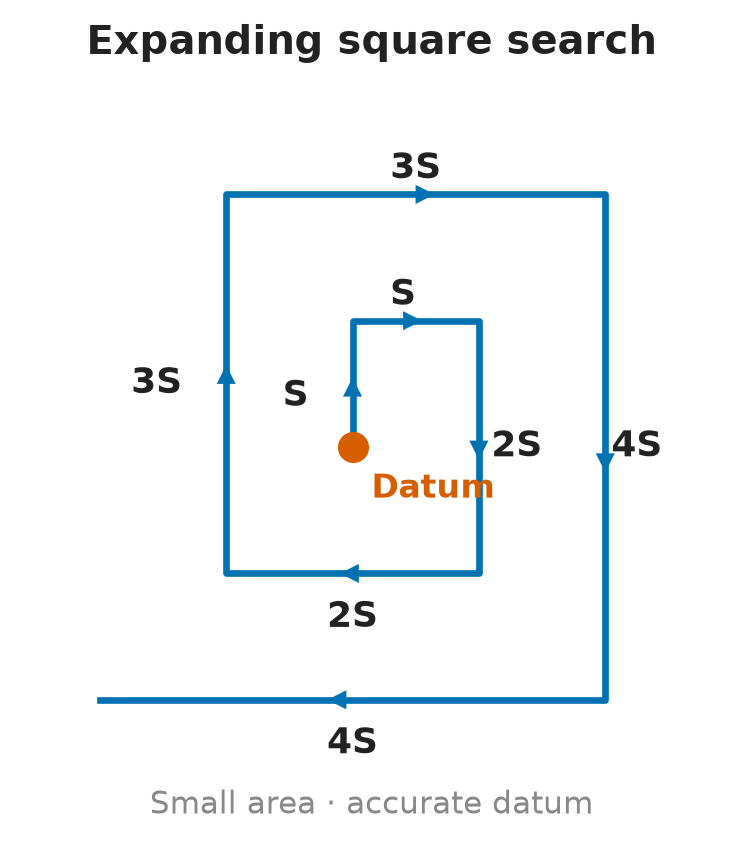
| Expanding square search (SS) | Begin at the datum and run square legs that grow outwards. Best for a small area with an accurate datum. |
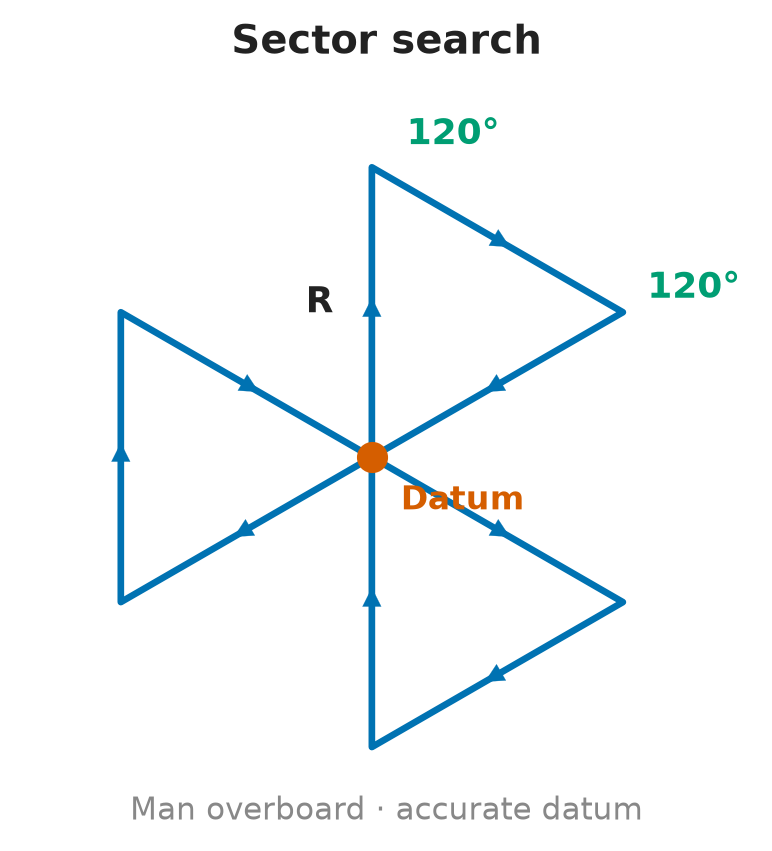
| Sector search | Accurate datum and a target that is hard to see, e.g. a man overboard. |
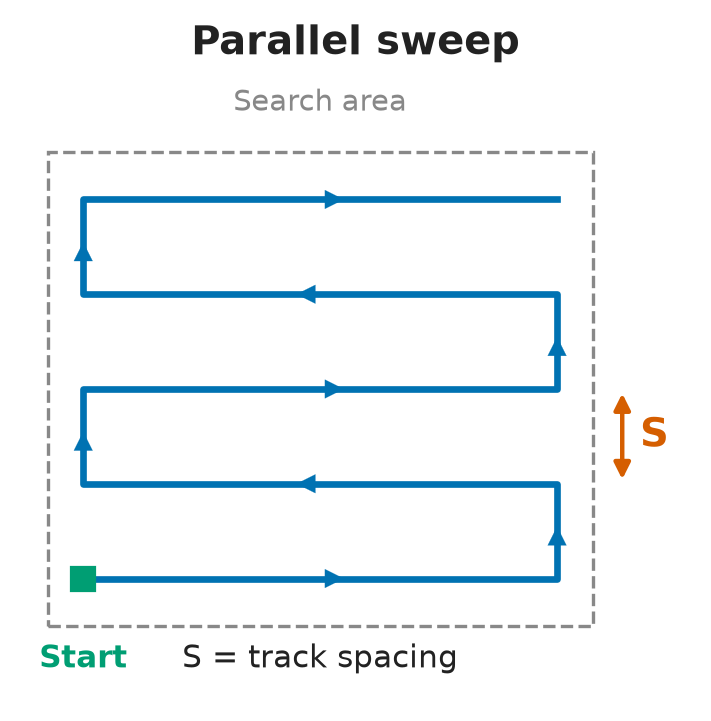
| Parallel sweep | Large area with the target’s position uncertain. |
Two answers in circulation for the question “small area, high probability of target location”:
- Written reference (IAMSAR-based summary): expanding square — small area, accurate datum.
- Instructor’s reading: sector search — “high probability of target location” taken to mean the position is almost certain; expanding square kept for a known datum where the target has since moved with set and drift. The instructor flagged this view as uncertain.
- Unresolved: check the exact IAMSAR Vol. III wording and decide from the options offered.
Self-quiz
Why do several ships search the same area using different patterns?
To cover it more than once after aircraft and fast vessels have swept it, raising the probability of detection.
How far off your track can a bright orange liferaft go unseen?
As little as 1–2 NM — hence tight track spacing.
Large area, survivor's position uncertain — which pattern?
Parallel sweep.
Man overboard, accurate datum, target hard to see — which pattern?
Sector search.
Small area, accurate datum — which pattern?
Expanding square search (SS), starting at the datum.
⚡ Flashcards
Test yourself, one card at a timeQ1What are radar's two roles in search and rescue?
AnswerLocating distress signals (radar SART, AIS-SART, MOB-AIS) and SAR operations: your radar picture + the other SAR units’ information → a SAR plan.
Q2On a SART's line of dots, which end do you steer for?
AnswerThe dot nearest to you — that is the SART. The line runs outwards, away from your ship, along the SART’s bearing.
Common trapSteering for the middle or the far end of the line.
Q3In a search pattern, what is S?
AnswerTrack spacing: the distance between adjacent legs (parallel sweep) and the unit of the expanding-square legs. Keep it tight.
Q4Expanding square search: where do you start and how do the legs grow?
AnswerStart at the datum; legs grow S, S, 2S, 2S, 3S…
Common trapStarting at the edge of the area.
Q5Sector search: what does the track look like?
AnswerEvery leg passes through the datum, with 120° turns.
Q6'Small area, high probability of target location' — which pattern?
AnswerTwo answers in circulation: written reference → expanding square; instructor’s reading → sector search. Read every option and the IAMSAR Vol. III wording.
Common trapAnswering by reflex without reading the keywords.
Q7Which IMO resolutions set the performance standards for SARTs?
AnswerRadar SART: IMO A.802(19), amended by IMO MSC.247(83). AIS-SART: IMO MSC.246(83).
Q8Which SOLAS regulation covers distress situations?
AnswerSOLAS V/33 — obligations and procedures in distress situations.
📚 Resources
Videos
- SART Explained | Search and Rescue Transponder Operation & Testing — MARINERS CLUB
- SART - Search and Rescue Transponder — The Sea Lad
- IAMSAR search patterns — Navigate with Ankit
Regulations
- IAMSAR Vol. III — Mobile Facilities (IMO/ICAO; paid publication, reference only) · IMO page
- SOLAS V/33 — distress situations: obligations and procedures
- IMO A.802(19) — performance standards for survival craft radar SARTs, amended by IMO MSC.247(83)
- IMO MSC.246(83) — performance standards for AIS-SART
Exam focus — MCA
Typical questions • “How does a SART appear on an X-band radar?” → initially a line of dots (12 blips, ~0.6 NM apart, ~8 NM long, outward along the bearing); arcs inside ~1 NM, circles very close. • Distractor to spot: a SART on S-band — it will not show; only 9 GHz triggers it. • “Which search pattern for a small area with a high probability of target location?” → written reference: expanding square; instructor’s reading: sector search. Unresolved — read every option and the IAMSAR wording. • Name the distress locating devices: radar SART, AIS-SART, MOB-AIS. What examiners look for: careful keyword reading (“X-band”, “small area”, “accurate datum”, “uncertain position”, “hard-to-see target”). When unsure, eliminate the wrong options first instead of hunting for the right one.